


Business technology is evolving faster than ever before. Organizations across industries are adopting new digital tools, automation systems, and data-driven strategies to remain competitive in a rapidly changing market. The rise of artificial intelligence, cloud computing, cybersecurity solutions, and edge technologies is transforming how companies operate, collaborate, and deliver value to customers.
In 2026, businesses are no longer experimenting with emerging technologies. Instead, they are integrating them deeply into their core operations and long-term strategies. Technology is no longer just a support function—it is now a central driver of growth, productivity, and innovation.
From AI-powered automation to industry-specific cloud platforms, these innovations are reshaping enterprise strategies around the world. This comprehensive guide explores the most important business technology trends that are shaping organizations today and will continue to influence the future of digital transformation.
Table of Contents
The Importance of Technology in Modern Business
Technology has become the backbone of modern organizations. Businesses rely on digital systems for communication, analytics, customer engagement, supply chain management, and operational efficiency.
Several factors are accelerating enterprise technology adoption:
- Digital transformation initiatives
- Rising customer expectations for personalized services
- Growth of remote and hybrid work models
- Massive data generation from digital platforms
- Global competition requiring operational efficiency
Artificial intelligence alone has become one of the biggest drivers of digital transformation. Companies are increasingly using AI tools to automate tasks, analyze large datasets, and improve decision-making processes.
Cloud computing is also expanding rapidly as organizations migrate their infrastructure to flexible, scalable environments. Instead of maintaining costly on-premise servers, businesses are adopting cloud platforms to manage workloads more efficiently.
As technology becomes more advanced, organizations must stay informed about emerging trends that can improve productivity and create competitive advantages.
Top Business Technology Trends in 2026
Below are the most influential technology trends transforming businesses worldwide.
1. Artificial Intelligence and Generative AI
Artificial intelligence has become a major force in enterprise innovation. Businesses are using AI systems to automate routine tasks, generate insights from large datasets, and improve customer experiences.
Generative AI tools are particularly transformative because they can create content, assist in software development, automate reports, and enhance customer support systems.
Business Applications of Artificial Intelligence
| Business Function | AI Application | Key Benefits |
| Customer Support | AI chatbots and virtual assistants | 24/7 support and faster responses |
| Marketing | Automated content creation and analytics | Improved campaign performance |
| Human Resources | Resume screening and employee analytics | Efficient recruitment |
| Finance | Fraud detection and predictive forecasting | Risk reduction |
| Software Development | AI coding assistants | Faster development cycles |
Benefits of AI for Businesses
- Automates repetitive and time-consuming tasks
- Improves data-driven decision making
- Enhances customer experiences
- Reduces operational costs
- Increases business productivity
As AI technology continues to evolve, more organizations will integrate intelligent automation into their core operations.
2. Cloud Computing and Multi-Cloud Strategies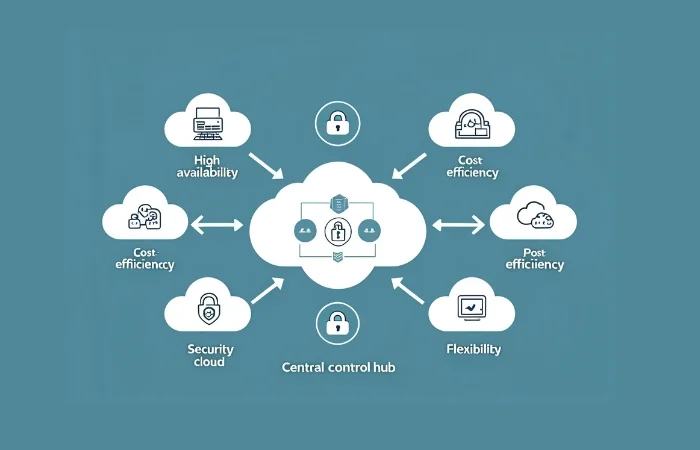
Cloud computing remains one of the most important trends in business technology. Instead of relying solely on traditional IT infrastructure, organizations are moving applications and data to cloud platforms.
Modern companies often adopt multi-cloud strategies, which involve using multiple cloud providers to improve reliability, flexibility, and cost optimization.
Cloud Computing Market Growth
| Cloud Segment | Growth Trend |
| Infrastructure as a Service (IaaS) | Rapid enterprise adoption |
| Platform as a Service (PaaS) | Growing developer usage |
| Software as a Service (SaaS) | Dominating enterprise software |
| Serverless computing | Increasing demand for scalability |
Advantages of Multi-Cloud Architecture
- Prevents vendor lock-in
- Improves reliability and uptime
- Enables flexible workload management
- Supports global business operations
Cloud computing allows businesses to scale their technology infrastructure based on demand, making it a critical component of digital transformation.
3. Edge Computing and Real-Time Data Processing
Edge computing is becoming increasingly important as businesses generate massive amounts of data. Instead of sending all data to centralized cloud servers, edge computing processes information closer to where it is generated.
This approach significantly reduces latency and improves real-time decision making.
Key Features of Edge Computing
- Faster data processing
- Reduced network congestion
- Improved response times
- Better performance for real-time applications
Business Applications of Edge Technology
| Industry | Edge Computing Use Cases |
| Manufacturing | Smart factory automation |
| Retail | Smart shelves and real-time inventory |
| Healthcare | Remote patient monitoring |
| Transportation | Autonomous vehicle systems |
| Energy | Smart grid management |
Edge computing is particularly valuable for industries where immediate data processing is essential.
4. Internet of Things (IoT)
The Internet of Things connects billions of devices worldwide, enabling businesses to collect valuable data from machines, sensors, and digital equipment.
IoT technologies allow organizations to monitor operations, track assets, and improve efficiency.
Applications Across Industries
| Industry | IoT Application |
| Healthcare | Wearable health monitoring devices |
| Manufacturing | Predictive maintenance systems |
| Retail | Smart inventory tracking |
| Agriculture | Soil and crop monitoring sensors |
| Logistics | Fleet tracking and route optimization |
IoT devices generate massive volumes of data, which businesses can analyze to optimize performance and reduce operational costs.
5. Cybersecurity and Zero-Trust Architecture
As businesses become more digitally connected, cybersecurity risks are increasing. Data breaches, ransomware attacks, and cyber threats have become major concerns for organizations.
To address these risks, many companies are adopting zero-trust security frameworks.
Zero-trust architecture operates on the principle that no user or device should automatically be trusted. Instead, every access request must be verified before granting permission.
Core Principles of Zero-Trust Security
- Continuous identity verification
- Strict access control policies
- Network segmentation
- Real-time threat monitoring
These strategies help businesses protect sensitive information and maintain secure digital environments.
6. Automation and Robotic Process Automation (RPA)
Automation technologies are transforming business operations by reducing manual workloads and improving efficiency.
Robotic Process Automation (RPA) allows software bots to perform repetitive tasks such as data entry, invoice processing, and report generation.
Examples of Business Automation
- Automated customer service systems
- AI-driven marketing platforms
- Intelligent supply chain management
- Digital accounting and financial automation
Automation enables organizations to streamline workflows and focus human resources on more strategic activities.
7. Extended Reality (XR) Technologies
Extended reality includes technologies such as virtual reality (VR), augmented reality (AR), and mixed reality.
These immersive technologies are increasingly used in business environments for training, product design, and collaboration.
Business Applications of XR
- Virtual employee training simulations
- Remote collaboration in virtual environments
- Product design and prototyping
- Interactive customer experiences
XR technologies are particularly valuable for industries such as manufacturing, healthcare, and education.
Technology Spending by Business Sector (Pie Chart Data)
Technology investments vary across different sectors depending on strategic priorities.
Below is an estimated distribution of enterprise technology spending.
| Technology Sector | Share of Investment |
| Artificial Intelligence | 28% |
| Cloud Infrastructure | 25% |
| Cybersecurity | 15% |
| IoT and Edge Computing | 12% |
| Automation and Robotics | 10% |
| Extended Reality | 5% |
| Other Technologies | 5% |
Suggested visualization: A 700×450 pie chart representing the distribution above.
Technology Cost Comparison for Businesses
The cost of implementing new technologies varies depending on company size and infrastructure requirements.
| Technology | Small Business Cost | Enterprise Cost | Implementation Time |
| AI Automation Tools | $5,000 – $30,000 | $100,000+ | 3–6 months |
| Cloud Infrastructure | $2,000 – $10,000 annually | $50,000+ annually | 1–3 months |
| Cybersecurity Systems | $3,000 – $20,000 | $80,000+ | 2–4 months |
| IoT Infrastructure | $10,000 – $50,000 | $200,000+ | 4–12 months |
| XR Training Platforms | $15,000 – $70,000 | $250,000+ | 6–12 months |
These estimates may vary depending on vendor selection, system complexity, and deployment scale.
How Businesses Can Prepare for Future Technology Trends
Organizations should take a strategic approach when adopting new technologies.
Best Practices for Technology Adoption
- Develop a Digital Transformation Strategy
Technology investments should align with long-term business objectives.
- Strengthen Data Infrastructure
Data management systems are essential for AI, analytics, and automation.
- Invest in Employee Training
Employees must develop digital skills to effectively use modern technologies.
- Prioritize Cybersecurity
Security should be integrated into every technology initiative.
- Implement Scalable Solutions
Cloud-based systems allow organizations to expand their infrastructure as business needs grow.
Challenges of Adopting Business Technology
While technology offers many benefits, organizations may encounter several challenges during implementation.
Common Challenges
- High technology implementation costs
- Integration with legacy systems
- Lack of technical expertise
- Data privacy concerns
- Increasing cybersecurity threats
Businesses must plan carefully to overcome these obstacles and ensure successful digital transformation.
The Future of Business Technology
The next decade will bring even more technological innovation.
Several emerging technologies are expected to shape the future of enterprise operations:
- Quantum computing for advanced data processing
- AI-driven autonomous organizations
- Advanced robotics and automation systems
- Decentralized digital infrastructure
- Sustainable technology solutions
Companies that adopt innovative technologies early will gain a significant competitive advantage in the digital economy.
Conclusion
Business technology trends are transforming industries and creating new opportunities for innovation. Artificial intelligence, cloud computing, IoT, cybersecurity, automation, and immersive technologies are becoming essential components of modern enterprise strategies.
Organizations that invest in these technologies can improve efficiency, reduce operational costs, and deliver better customer experiences.
However, successful technology adoption requires strategic planning, skilled talent, and continuous innovation. Businesses that stay informed about emerging technology trends will be better positioned to thrive in the evolving digital landscape.